
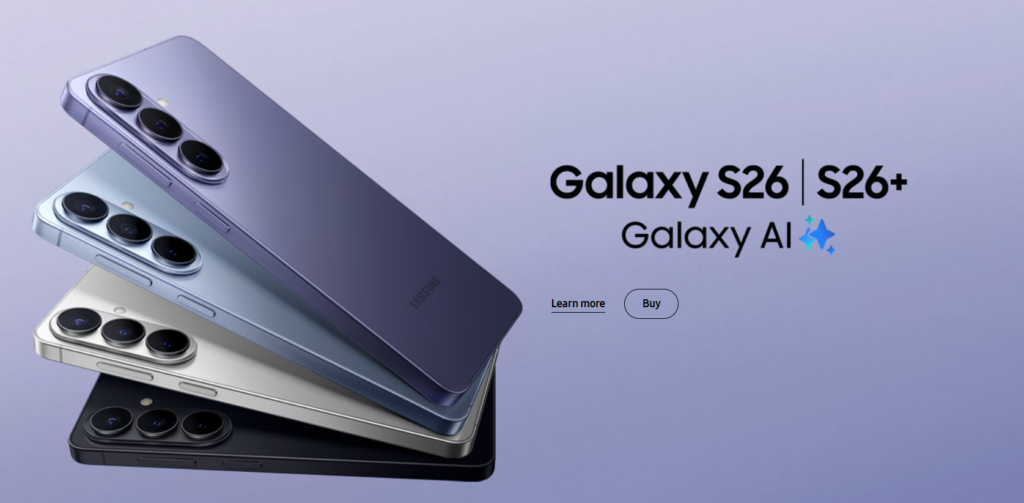
Samsung is not just a company. For many people, it is part of Korea’s economic story.
When foreigners think of Korean companies, one name usually comes first.
Samsung.
But in Korea, Samsung is not just an electronics company.
It is a workplace for many people.
It is a stock owned by many investors.
It is a major source of exports.
And it is one of the strongest symbols of Korea’s economic rise.
So if you want to understand the Korean economy, you eventually need to understand Samsung.
1. Samsung Is Korea’s Largest Company
Samsung Electronics is Korea’s most important listed company.
It affects the stock market, exports, employment, pensions, and even the national mood.
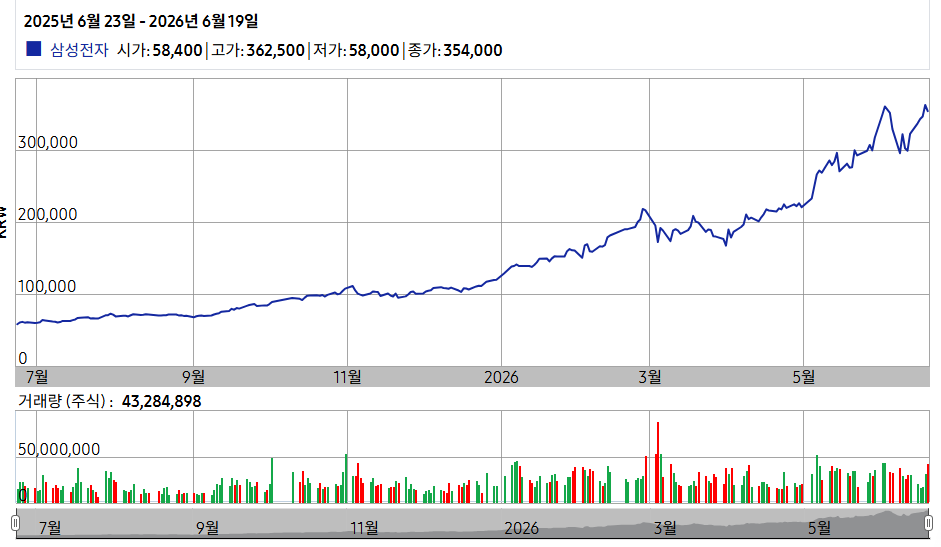
As of June 2026, Samsung Electronics’ market capitalization was above KRW 2,000 trillion, roughly USD 1.3 trillion.
That number is hard to feel in real life.
So here is a simpler way to think about it.
In Korea, people often joke that almost every Korean owns at least one share of Samsung Electronics.
Of course, that is not literally true.
But the joke exists for a reason.
Samsung is not just a company that investors watch. It is a company ordinary Koreans talk about.
When Samsung rises, many people feel that the Korean stock market is strong.
When Samsung struggles, people begin to worry about the broader economy.
This is why Samsung is different from most companies.
It is not only part of the market.
In many ways, it is the market.
2. Samsung Helped Transform Korea Into A Global Economy
Korea’s modern history was not comfortable.
The country experienced Japanese colonial rule, the Korean War, national division, poverty, and decades of uncertainty.
In the 1960s, Korea was still a poor country.
But Korea chose an export-driven growth model.
Large companies such as Samsung, Hyundai, and LG became central players in that transformation.
They built factories.
They hired workers.
They exported products.
They learned from global competitors.
Then they became global competitors themselves.
Samsung’s role was especially important because it did not stop at simple manufacturing.
It moved into televisions, home appliances, smartphones, and most importantly, semiconductors.
The semiconductor story matters.
Many people today know Samsung because of Galaxy smartphones. But Samsung’s deeper power comes from chips.
Long before semiconductors became the center of the AI economy, Samsung kept investing in them.
Again and again.
Investment after investment.
That is one reason Samsung became one of the world’s most important memory chip makers.
To me, this is where Samsung becomes more than a business case.
Samsung shows how Korea grew.
Not overnight.
Not by luck.
But through exports, discipline, technology, government policy, cheap labor in the early stage, and the Korean obsession with detail.
That combination created the Korea we see today.
3. Samsung Dominates Korea’s Stock Market
Samsung is also deeply connected to Korean investors.
Many Koreans own Samsung directly.
But even people who do not buy Samsung shares may still be exposed to Samsung indirectly.
Through the National Pension Service.
Through ETFs.
Through retirement accounts.
Through Korean equity funds.
Korea has a public pension system called the National Pension Service. Workers pay into it, and the fund invests that money instead of simply keeping it in a government account.
A large amount of that money is invested in Korean and global assets.
And Samsung Electronics has long been one of the most important Korean stocks in that system.
This creates a very Korean connection.
Samsung is connected to the stock market.
The stock market is connected to pensions.
Pensions are connected to ordinary citizens.
So when Samsung performs well or poorly, it does not affect only professional investors.
It can also affect the retirement money of regular Korean people.
That is why Samsung’s earnings are not just corporate news in Korea.
They are national economic news.
4. Samsung Is The World’s Largest Memory Chip Maker
Many foreigners think Samsung is mainly a smartphone company.
That is understandable.
Galaxy phones are visible.
Memory chips are not.
But the invisible part may be more important.
Samsung is one of the world’s largest makers of DRAM and NAND flash memory.
These chips are used in smartphones, computers, servers, data centers, cloud systems, and AI infrastructure.
In the AI era, this matters even more.
AI is not just about software.
AI needs data centers.
Data centers need servers.
Servers need chips.
And chips need memory.
That is why Samsung remains important even when the conversation moves from smartphones to artificial intelligence.
In recent years, global AI companies and Korean technology giants have become more closely connected.
Nvidia’s Jensen Huang has met with major Korean business leaders, including companies such as Samsung Electronics, SK Hynix, and Hyundai Motor.
That shows something important.
Korea is not just a consumer market for AI.
Korea is part of the AI supply chain.
And Samsung is one of the companies sitting near the center of that chain.
5. Samsung Is Everywhere In Daily Life
In Korea, Samsung is hard to avoid.
You may use a Samsung smartphone.
You may watch a Samsung TV.
You may have a Samsung credit card.
You may buy Samsung insurance.
You may visit Samsung Medical Center.
You may live in an apartment built by a Samsung-related construction company.
Samsung is not only Samsung Electronics.
It is part of a much larger business group.
This is why Samsung feels different inside Korea.
It is not just a brand on a phone.
It appears in finance, hospitals, construction, insurance, electronics, and daily life.
But there is one interesting point.
Samsung does not own a bank.
Korea has a principle called the separation of industrial and financial capital. In simple terms, big industrial groups cannot freely control banks the way they control other businesses.
The reason is simple.
If a giant industrial group also controlled a major bank, its influence could become too powerful.
So Samsung has financial companies, such as insurance and securities businesses, but it does not operate a commercial bank like a normal banking group.
This small detail tells us something about Korea.
Korea wants large companies to grow.
But Korea also worries when they become too powerful.
Samsung sits exactly inside that tension.
6. Why Some Koreans Worry About Samsung’s Influence
Samsung is a symbol of Korea’s success.
But it is also part of Korea’s biggest economic debate.
That debate is about chaebol.
A chaebol is a large family-controlled business group in Korea.
Samsung, Hyundai, SK, and LG are famous examples.
Chaebol groups helped Korea grow quickly. They created jobs, exports, technology, and global brands.
But many Koreans also worry that the economy depends too much on a few large companies.
If Samsung becomes too important, the country can become vulnerable.
If Samsung has a bad year, the stock market feels it.
If Samsung loses competitiveness, exports feel it.
If Samsung struggles in semiconductors, Korea’s growth story feels weaker.
So Samsung is both pride and pressure.
It represents what Korea achieved.
But it also reminds Korea of a difficult question.
Can one company become too important to a country?
Ted Chang Insight
Koreans sometimes say:
“When Samsung catches a cold, the Korean economy sneezes.”
Of course, this is an exaggeration.
But exaggerations often survive because they contain a little truth.
Samsung has that kind of place in Korea.
There are even old market stories that Samsung’s stock price used to move with rumors about the late Chairman Lee Kun-hee’s health or return to Korea.
Is that a serious investment theory?
No.
It is just market folklore.
But the fact that such stories existed tells us something.
Samsung was never just another company in Korea.
For foreign readers, this is the key point.
You cannot fully understand Korea only by visiting Seoul, eating Korean food, or watching K-dramas.
You also need to understand Samsung.
Because Samsung is one of the clearest examples of how Korea moved from poverty to a global economy.
It is a company.
But in Korea, it is also a symbol.
A symbol of growth.
A symbol of exports.
A symbol of technology.
A symbol of national pride.
And sometimes, a symbol of Korea’s dependence on a few very powerful companies.
That is why Samsung matters to Korea.