
Introduction: The First Cultural Surprise
The first time I traveled abroad, I experienced something unexpected.
When I mentioned that most Koreans live in apartments, someone looked surprised and asked:
“Really? Apartments? Isn’t that for people who can’t afford a house?”
For many Koreans, that question feels strange.
In Korea, apartments are often the most desirable homes in the country.
Some of the most expensive properties in Seoul are apartments.
This raises an interesting question.
Why do so many Koreans choose to live in apartments?
The answer is not just about housing.
It is about history, education, transportation, convenience, and even wealth.
1. Korea Became Urban Very Quickly
Modern Korea developed at an incredible speed.
After the 1960s, millions of people moved from rural areas to cities.
Seoul’s population exploded.
The country needed a way to house large numbers of people quickly.
Apartments became the most practical solution.
Instead of spreading outward like many North American cities, Seoul grew upward.
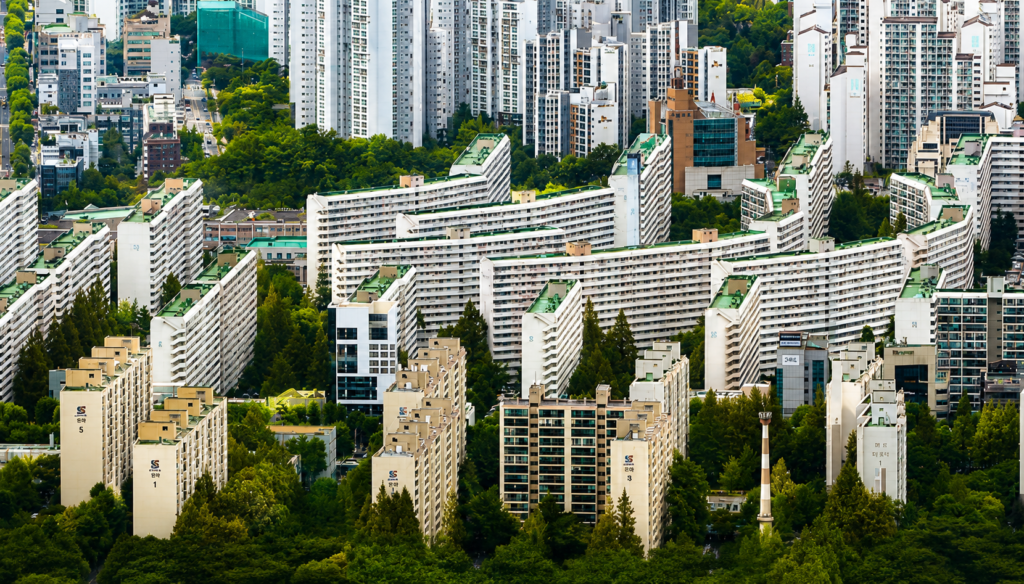
Today, high-rise apartment complexes define much of the Korean skyline.
2. Apartments Solved a Space Problem
Korea simply does not have much usable land.
Most of the country is mountainous.
Seoul is surrounded by hills and mountains.
When millions of people want to live near jobs, schools, and transportation, land becomes extremely valuable.
Building upward makes more sense than building outward.
Apartments allowed Korea to house more people while staying close to city centers.
3. Apartments Became More Than Housing
This is where many foreigners misunderstand Korea.
An apartment is not just a place to live.
For many Koreans, an apartment represents:
Home. Investment. Education. Transportation. Lifestyle
In some countries, wealthy people prefer hilltop mansions.
In others, luxury neighborhoods are protected behind multiple gates and private security checkpoints.
Every country has its own version of a “good address.”
Korea developed a different model.
Many people prefer living in high-quality apartments near the city center.
The best apartment locations often offer excellent subway access, shopping, hospitals, schools, and public services.
Life simply becomes easier.
As someone who commutes to Seoul regularly, I understand why this matters.
Koreans even have a nickname for crowded rush-hour trains:
“Hell Subway.”
Imagine spending two hours a day commuting.
Now imagine walking to work in Gangnam instead.
Location matters.
A lot.
4. Education Changed Where Families Live
Education may be one of the biggest reasons behind Korean housing demand.
There is a famous historical figure named Shin Saimdang, often remembered as an ideal mother in Korean history.
According to historical records, she moved multiple times to support her children’s education.
That mindset still exists today.
Many Korean parents are willing to move, pay higher rent, or buy more expensive homes if it means access to better schools.
Neighborhoods with strong school districts often become some of the most expensive places to live.
Many Koreans even joke:
“If Korean mothers decide a neighborhood is good, home prices will eventually follow.”
There is more truth in that statement than many people realize.
5. Convenience Is Hard To Ignore
Modern Korean apartment complexes are designed for convenience.
Most offer:
Security offices
CCTV systems
Parking garages
Elevators
Playgrounds
Convenience stores
Delivery services
For Koreans, these are often considered basic expectations.
One thing that surprises many foreigners is package delivery.
In many apartment complexes, packages are simply left outside residents’ doors.
At first, this seems risky.
But package theft remains relatively uncommon compared to many other countries.
Some people credit CCTV.
Others point to social norms.
Whatever the reason, it is one of those everyday conveniences that residents quickly become accustomed to.
6. Some Koreans Introduce Themselves by Apartment Name
This part is both funny and slightly embarrassing.
Ask a Korean:
“Where do you live?”
You might hear:
“I live in Eunma Apartment.”
“I live in Raemian.”
Or:
“I live in Xi.”
Sometimes people mention the apartment name before the neighborhood itself.
What makes this even more amusing is that many Korean apartment names are English words.
We are in Korea.
Yet many of our apartment names sound like luxury brands.
Honestly, it still feels a little strange to me.
7. Why Foreigners Often Change Their Minds
Many foreigners initially see Korean apartment complexes and think:
“All these buildings look the same.”
That reaction is understandable.
But after living in Korea, many people start saying something different.
“Now I understand why Koreans like apartments.”
The transportation is convenient.
The services are convenient.
The schools are nearby.
The daily routine becomes easier.
Over time, the advantages become difficult to ignore.
Conclusion
Koreans did not choose apartments simply because they liked them.
Historical circumstances pushed the country toward high-density housing.
Over time, apartments evolved into the most practical housing solution.
But there is one more reality.
Apartments have also become one of the primary ways Korean families build wealth.
In Seoul, apartment prices often exceed 1 billion won.
For many ordinary workers, buying a home is becoming increasingly difficult.
Yet apartments remain deeply connected to how Koreans think about stability, family, education, and financial success.
To understand Korea, you need to understand its apartments.